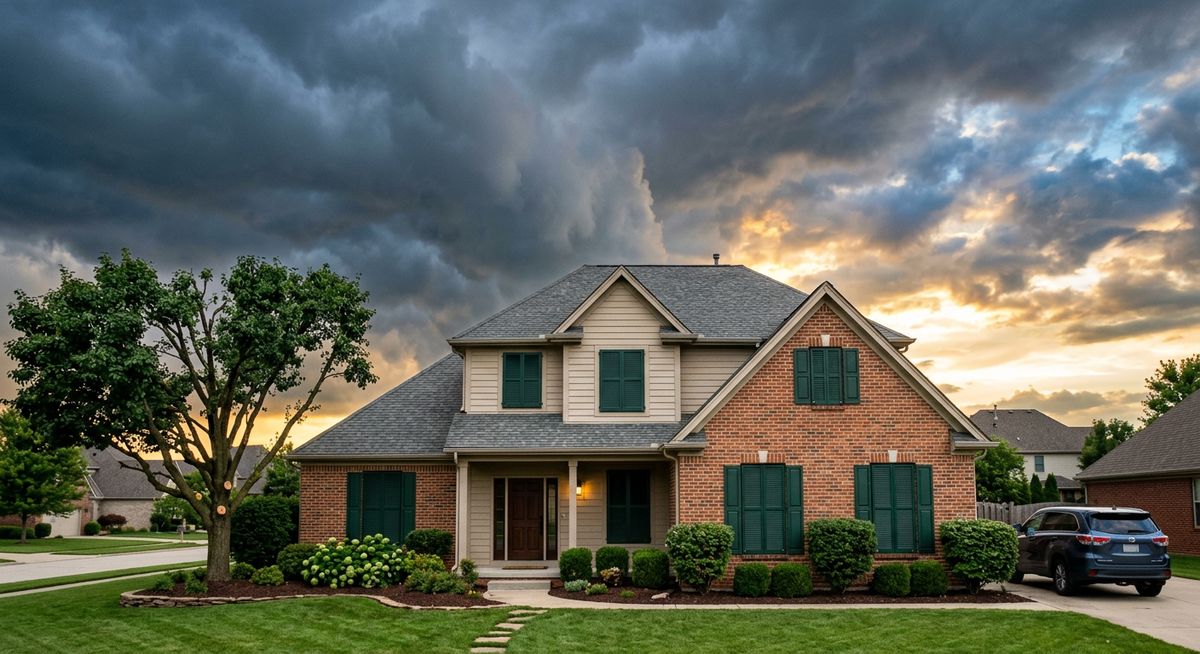
Severe weather is the single largest driver of homeowners insurance claims in the Upper Midwest, and the pattern is predictable long before the first siren sounds. Hail arrives between May and September, derecho-style straight-line winds follow warm fronts in late summer, and the freeze-thaw cycle of early spring produces the ice dams and burst pipes that flood basements. Homeowners who prepare in April usually file nothing in August. Homeowners who wait for a forecast warning discover that the hardware store is sold out of plywood and their roofer has a six-week queue.
Start with the roof, because it is where the money goes. Walk around your house with binoculars and look for lifted, cracked or missing shingles, damaged flashing around chimneys and vents, and granules collecting in your gutters — a gutter full of granules means the shingle surface is wearing thin. If your roof is more than fifteen years old, book a free inspection now rather than after a storm, when every roofer in the state is chasing the same hail damage. A roofer's written condition report is also useful evidence if a claim is ever disputed, and many carriers will apply a credit for a recently certified roof.
Trees deserve the same attention. The limbs that damage houses are almost always dead, diseased or already cracked, and they are easy to spot in late winter before the leaves hide them. Anything hanging over the roof, the driveway or a neighbour's property should come down while the ground is workable and arborists still have availability. Removing a hazard limb costs a few hundred dollars; removing a trunk that has come through a bedroom ceiling costs five figures plus the deductible you chose.
The 45-minute pre-storm walkthrough
- Clear gutters and downspouts, and confirm water exits at least six feet from the foundation.
- Photograph every room, the roof, the exterior and serial numbers of electronics — upload the set to cloud storage.
- Secure or store patio furniture, grills, trampolines, bins and anything else that becomes a projectile.
- Find your water shut-off valve, test the sump pump, and check the backup battery or water alarm.
- Save your policy number, deductible and our claims line in your phone before you need them.
Water is the claim people least expect. Standard homeowners policies cover water that comes from above — a hole in the roof, a wind-driven window — but they do not cover water that rises from the ground or backs up through a drain unless you have added a water backup endorsement. In our experience that endorsement costs between fifty and one hundred and fifty dollars a year and is the most frequently regretted omission in Minnesota. If you have ever had a wet basement after heavy rain, ask us to add it at your next renewal, and consider a backflow valve if your street has a history of sewer surcharge.
Documentation is what turns a stressful week into a straightforward settlement. Before any storm, spend thirty minutes photographing or filming each room, opening drawers and cupboards, and capturing the model and serial numbers of televisions, laptops, appliances and tools. Store that folder in cloud storage rather than on the same laptop a fire might destroy. Keep receipts for major purchases in the same place. When a loss happens, an inventory with dates and values is worth thousands of dollars, because the burden of proving what you owned sits with you, not the insurer.
Know your deductible and your rebuild limit before the emergency, not during it. A five hundred dollar deductible and a one thousand dollar deductible change the maths of whether a small roof claim is worth filing — and filing a claim under your deductible, or filing twice in three years, can raise your premium or make you harder to insure later. Equally important, confirm that your dwelling limit reflects today's rebuild cost rather than the market value from the year you bought. Construction prices have moved substantially, and a policy written for a $280,000 rebuild on a house that now costs $390,000 to rebuild leaves you paying the difference out of pocket.
Have a plan for the hours immediately after a loss. Move people and pets somewhere safe, shut off water or gas if there is damage to those systems, and make only temporary repairs that prevent further damage — tarp the roof, board the window, shovel the water. Keep every receipt, because mitigation costs are usually reimbursable, while permanent repairs made before the adjuster has inspected can be disputed. Photograph everything before you move or discard a single item, and do not throw away damaged goods until the insurer has signed them off.
Finally, use your advisor. That is what we are here for. A fifteen-minute call before storm season lets us check your endorsements, confirm your limits, verify that your roof age is recorded correctly, and make sure you know exactly who to ring at two in the morning. Families who do this annually file fewer claims, settle the ones they do file faster, and pay less for the same protection. Call us on +1 612-338-7845 or send your declarations page through the contact form and we will review it free of charge.